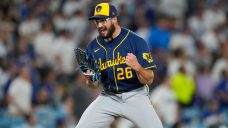
If one thing is clear after 162 games of regular-season action and three rounds of playoff baseball, it’s that the Milwaukee Brewers and Tampa Bay Rays have separated themselves as the best of the best in their respective leagues.
Coming off convincing victories in the National and American League Championship Series, the Brewers and Rays find themselves as the last teams standing in the hunt for the Commissioner’s Trophy this season.
Catch each game of the 2026 World Series on Sportsnet and Sportsnet+, beginning with Game 1 Friday at 8 p.m. ET / 5 p.m. PT.
However this year’s World Series plays out, a first-time champion will be crowned, as Milwaukee dropped its lone trip to the Fall Classic in 1982 while Tampa Bay fell on baseball’s final stage in 2008 and 2020.
Although neither side has claimed that elusive World Series title, this is still a meeting between two of baseball’s strongest organizations.
Since 2018, the Brewers and Rays have emerged as October staples, combining for 14 playoff appearances, nine division titles, five championship-series berths and a .569 regular-season winning percentage.
This season was no different as Milwaukee and Tampa Bay continued to stake their claims as two of the best-run franchises in baseball, relying on strong pitching and defence, solid baserunning and a contact-heavy approach to reach the World Series.
Now, we’ll see who can finish the job under the brightest lights the sport has to offer.
No. 1 Milwaukee Brewers (103-59) vs. No. 1 Tampa Bay Rays (98-64)
What’s working for the Brewers: After winning an MLB-best 103 games in the regular season, Milwaukee has continued to roll in October, losing just one game while dispatching the San Diego Padres and spoiling the Los Angeles Dodgers’ three-peat bid.
But it was the way the Brewers handled the Dodgers that confirmed things are different in Cream City this year. Milwaukee trailed in all four games of its sweep of Los Angeles and proved undaunted by a star-studded rotation headlined by Tarik Skubal and Yoshinobu Yamamoto. Best exemplified by NLCS MVP Jake Bauers’ 12- and 11-pitch at-bats in Games 2 and 3, the Crew’s offence wore down some of the best pitchers in the world with a resilient, relentless approach before cashing in to complete the four-game stunner.
As impressive as Milwaukee’s lineup was against Los Angeles, though, its bullpen continued to be the hero of October for the NL Central champs. After Brewers relievers combined to allow just one earned run over 19 innings in the NLDS, they allowed five earned and struck out 22 over 21.2 NLCS innings — led by 6.2 scoreless frames from Aaron Ashby, who closed Game 4 with a nine-out save.
What’s working for the Rays: After falling behind 2-1 in the ALCS against the Cleveland Guardians, Tampa Bay ripped off three straight wins to claim the pennant behind its deep starting rotation and its three best hitters.
In Games 1 through 3 against Cleveland, Yandy Díaz, Jonathan Aranda and Junior Caminero went a combined 5-for-34 with two extra-base hits and one walk. But in the final three contests of the series, the trio flipped the script. They went 15-for-39 with six extra-base hits, including three homers, changing the tenor of the series. Often in October, stars drive outcomes in the biggest moments, and if the Rays are to take down the Brewers, they’ll need Díaz, Aranda and Caminero to keep swinging hot bats.
The stars in the lineup weren’t the only ones to make their mark against the Guardians, however. Tampa Bay’s starting staff of Drew Rasmussen, ALCS MVP Freddy Peralta and Nick Martinez put a lid on any momentum Cleveland was carrying from its ALDS comeback against Chicago, permitting just three earned runs across 18.1 innings in the Rays’ three straight wins. That built on what has been an exceptional post-season for Tampa Bay’s starters, who own a 1.98 playoff ERA — the best in baseball — with Rasmussen and Peralta pitching beyond their all-star resumes.
Where the Brewers are vulnerable: When Milwaukee began its post-season journey, it felt likely that its top-of-rotation duo, Jacob Misiorowski and Logan Henderson, would be paramount to its success against some of the NL’s most potent lineups. But instead of building on their elite regular-season numbers, “The Miz” and Henderson have been a little underwhelming. Misiorowski hasn’t made it out of the fifth inning in either of his starts, and Henderson has seen his walk rate jump by over seven per cent.
The Brewers have leaned on their bullpen to great success in these playoffs, but compared to Tampa Bay — which has gotten more quality innings from its rotation than any other club this post-season — their relievers have been pushed harder. And as we’ve seen play out often in October, even the most reliable bullpens can succumb to a heavy workload. So, in a series that looks to be as tight as this one, Milwaukee will need Misiorowski and Henderson to rediscover their regular-season form.
Where the Rays are vulnerable: When Rasmussen, Peralta, Martinez, Cam Booser and Bryan Baker have been on the mound for Tampa Bay this post-season, things have generally gone pretty well for the Rays. But when it’s been any other member of Tampa’s pitching staff, its opponents have generally found a way to score. In 58.1 playoff innings, the five listed above have posted a 1.23 ERA, while in 21.2 innings from the rest of the staff, that number has ballooned to 6.23.
As we saw in the NLCS, the Brewers have no problem wearing down premier starting pitching. But with the bridge between Tampa Bay’s starters and its all-star closer Baker so shaky, manager Kevin Cash is going to need to carefully pick and choose the spots in which he deploys his relievers and perhaps get creative with his more reliable arms.
It’ll all come down to: Which cracks first, Tampa Bay’s rotation or Milwaukee’s bullpen? The Rays and Brewers have many similarities. With their strong pitching staffs, speed on the basepaths, athleticism across the diamond and enough power to leave the yard when it matters, they have built two rosters worthy of winning it all. But on their paths to this World Series, they’ve used different approaches to cover 27 outs, with Tampa Bay’s starters dominating deeper into games and Milwaukee’s relievers shutting down late-game comebacks. With so little separating these teams, the Fall Classic could hinge on whose strength holds up longer over the best-of-seven.